Blog
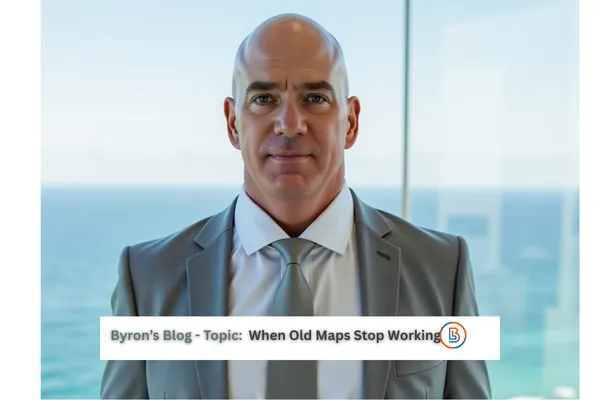
Discernment Begins When the Old Map Stops Working
“Your vision will become clear only when you look into your heart."
- Carl Jung
Initial thoughts…
Most frustration in leadership and career transitions comes from using outdated maps.
What worked before no longer applies — but we keep forcing it anyway.
Discernment begins the moment we stop asking, “How do I get back to certainty?”
and start asking, “What is this moment asking of me?”
The Framework
When the map disappears, discernment replaces direction through:
1. Letting go of false certainty
Titles, timelines, and expectations often create more confusion than clarity.
2. Re-centering identity
Clarity follows when decisions are anchored in who you are, not who you’re trying to become.
3. Listening for alignment
Discernment tunes into what brings steadiness, energy, and coherence — not just advancement.
Seeing the Shift
When you release the need for immediate answers, better questions emerge.
Discernment doesn’t rush direction — it reveals it.
Questions for Reflection
What “map” am I still clinging to that no longer fits?
Where am I forcing clarity instead of allowing it to surface?
What feels steady, even if it’s uncertain?
Leadership Application
Organizations also outgrow maps.
Leaders who practice discernment help teams navigate change without panic, honoring both direction and human impact.
Closing thoughts…
When the map is gone, the compass matters more.
Discernment is how you learn to trust it.
What to do about it…
Discernment is the skill that allows you to move forward without forcing clarity or betraying yourself.
If this resonated, explore how discernment guides career and leadership decisions — knowing when to move, when to pause, and what is actually worth pursuing.
If you’re ready to apply this in your own life or career, the 30-Day Career Momentum Sprint helps you rebuild clarity and direction with intention.
→ Explore the 30-Day Career Momentum Sprint
Prefer a conversation instead?